

+91 9699915789
Book an Appointment

Wockhardt Hospital
Agripada , Mumbai Centra
+91 9699915789
Book an Appointment
Wockhardt Hospital
Agripada , Mumbai Centra
Our Single Blog Posts
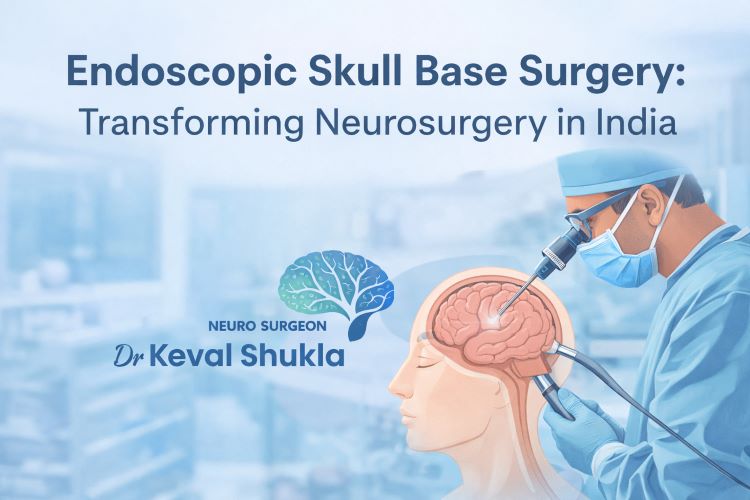
How Endoscopic Skull Base Surgery is Transforming Neurosurgery in India
Posted by Admin | Dec 18, 2025
Table of Contents
- Introduction
- Understanding the Skull Base and Its Surgical
Challenges
- What Is Endoscopic Skull Base Surgery?
- Why Traditional Skull Base Surgery Was So Complex
- How Endoscopic Techniques Are Changing Neurosurgery
- Conditions Treated with Endoscopic Skull Base Surgery
- Technological Advancements Driving This Transformation
- Benefits for Patients
- Growth of Endoscopic Skull Base Surgery in India
- Choosing the Right Specialist and Center
- Future of Endoscopic Skull Base Surgery in India
- FAQs
- Conclusion
1.
Introduction
Neurosurgery has witnessed
remarkable advancements over the last two decades, and one of the most
revolutionary developments is Endoscopic Skull Base Surgery. This
minimally invasive approach has dramatically changed how complex brain and
skull base conditions are treated, especially in India.
Earlier, skull base surgeries
required large incisions, prolonged hospital stays, and significant recovery
time. Today, with endoscopic techniques, surgeons can access deep-seated brain
areas with minimal disruption, leading to safer procedures and faster recovery.
This evolution is transforming neurosurgical care across India and improving
patient outcomes.
2.
Understanding the Skull Base and Its Surgical Challenges
The skull base is the bony
area at the bottom of the skull that separates the brain from structures such
as:
- Nasal cavity
- Sinuses
- Eyes (orbits)
- Major blood vessels
- Cranial nerves controlling vision, facial movement,
swallowing, and hearing
Because of the density of critical
structures in this region, even minor surgical errors can lead to serious
complications. This made skull base surgery one of the most challenging areas
in neurosurgery for decades.
3.
What Is Endoscopic Skull Base Surgery?
Endoscopic skull base surgery is a minimally
invasive technique that allows surgeons to reach deep areas of the skull
base using an endoscope—a thin tube equipped with a high-definition
camera and light source.
Instead of opening the skull,
surgeons often access the skull base through natural pathways such as the
nose and sinuses. This approach provides:
- Enhanced visualization
- Precise surgical control
- Reduced trauma to healthy brain tissue
This technique is commonly referred
to as endonasal endoscopic surgery.
4.
Why Traditional Skull Base Surgery Was So Complex
Traditional skull base surgery
typically involved open craniotomy, where a part of the skull is removed
to reach the brain. While effective, this method had several limitations:
- Large incisions and visible scars
- Brain retraction causing tissue stress
- Higher risk of infection and blood loss
- Longer hospital stays
- Extended recovery and rehabilitation
These challenges prompted the search
for safer and less invasive alternatives, leading to the rise of endoscopic
techniques.
5.
How Endoscopic Techniques Are Changing Neurosurgery
Endoscopic skull base surgery has
fundamentally altered neurosurgical practice in several ways:
Better
Visualization
High-definition cameras provide
magnified, panoramic views of complex anatomy, allowing surgeons to operate
with exceptional precision.
Minimal
Brain Manipulation
Since surgeons access the skull base
without retracting the brain, the risk of neurological injury is significantly
reduced.
Precision-Based
Surgery
Advanced navigation systems guide
surgeons in real time, enhancing safety in delicate regions.
Collaborative
Surgical Approach
Endoscopic skull base procedures
often involve both neurosurgeons and ENT (ear, nose, throat) specialists
working together, improving surgical outcomes.
6.
Conditions Treated with Endoscopic Skull Base Surgery
Endoscopic skull base surgery is
used to treat a wide range of conditions, including:
- Pituitary adenomas
- Skull base tumors
(meningiomas, chordomas, craniopharyngiomas)
- CSF (cerebrospinal fluid) leaks
- Sinonasal and parasellar tumors
- Optic nerve compression
- Congenital skull base defects
- Inflammatory or fungal infections of the skull base
Many of these conditions previously
required major open surgeries but can now be treated with minimally invasive
approaches.
7.
Technological Advancements Driving This Transformation
Several innovations have accelerated
the adoption of endoscopic skull base surgery in India:
High-Definition
& 3D Endoscopy
Provides superior depth perception
and clarity during surgery.
Neuronavigation
Systems
Acts like a GPS for the brain,
guiding surgeons safely through complex anatomy.
Intraoperative
Imaging
Real-time imaging ensures accurate
tumor removal and reduces recurrence.
Improved
Surgical Instruments
Specialized micro-instruments
designed for endoscopic use allow delicate tissue handling.
These advancements have helped
Indian neurosurgical centers match global standards of care.
8.
Benefits for Patients
From a patient’s perspective,
endoscopic skull base surgery offers several advantages:
- No external scars
- Reduced pain and blood loss
- Shorter hospital stays
- Faster recovery and return to daily life
- Lower risk of infection
- Improved quality of life post-surgery
Patients often experience quicker
symptom relief and fewer complications compared to traditional surgery.
9.
Growth of Endoscopic Skull Base Surgery in India
India has emerged as a significant
hub for advanced neurosurgical care due to:
- Highly trained neurosurgeons
- Increasing availability of advanced technology
- Multidisciplinary surgical teams
- Cost-effective treatment compared to many countries
Major cities have seen rapid
adoption of endoscopic skull base techniques, making advanced brain surgery
accessible to a wider population. This growth has also positioned India as a
destination for international patients seeking high-quality neurosurgical
treatment.
10.
Choosing the Right Specialist and Center
Endoscopic skull base surgery
requires specialized training and experience. Patients should look for:
- A neurosurgeon experienced in minimally invasive and
endoscopic procedures
- Hospitals equipped with advanced imaging and navigation
systems
- Availability of ENT, endocrinology, and neuro-ICU support
- Comprehensive pre- and post-operative care
Selecting the right surgical team
plays a crucial role in ensuring safety and long-term success.
11.
Future of Endoscopic Skull Base Surgery in India
The future of endoscopic skull base surgery in India looks promising. Ongoing developments include:
- Robotic-assisted endoscopic surgery
- Artificial intelligence-guided surgical planning
- Enhanced 3D visualization
- Improved training programs for neurosurgeons
As technology continues to evolve,
these procedures are expected to become even safer, more precise, and widely
available.
12. Frequently
Asked Questions (FAQs)
1. What is endoscopic skull base
surgery?
Endoscopic skull base surgery is a minimally invasive neurosurgical
technique that allows surgeons to access deep brain areas through natural
pathways like the nose using a high-definition endoscope.
2. Is endoscopic skull base
surgery safer than traditional brain surgery?
In suitable cases, it can be safer because it avoids large skull openings,
reduces brain manipulation, and lowers the risk of infection and complications.
3. What conditions can be treated
with endoscopic skull base surgery?
It is commonly used to treat pituitary tumors, skull base tumors, CSF leaks,
optic nerve compression, and certain congenital skull base defects.
4. How long does recovery take
after endoscopic skull base surgery?
Most patients recover faster compared to traditional surgery, often
returning to daily activities within 2–4 weeks, depending on the condition
treated.
5. Does endoscopic skull base
surgery leave scars?
No. Since the surgery is performed through the nose or small natural
openings, there are no visible external scars.
6. Is endoscopic skull base
surgery available in India?
Yes. With advancements in neurosurgery, several specialized centers in India
now offer endoscopic skull base surgery using modern technology.
7. Who is a suitable candidate for
this surgery?
Suitability depends on the type, size, and location of the lesion. A
qualified neurosurgeon determines eligibility after detailed imaging and
evaluation.
13.
Conclusion
Endoscopic skull base surgery has
transformed neurosurgery in India by offering a safer, minimally invasive
alternative to traditional open brain surgery. With improved visualization,
reduced complications, and faster recovery, this technique has redefined
patient care for complex brain and skull base conditions.
As expertise and technology continue
to grow, endoscopic skull base surgery is set to play an even bigger role in
shaping the future of neurosurgery in India—bringing hope, safety, and better
outcomes to patients nationwide.
Related Blogs
Table of Contents...
Back pain and spine...
I was recently hon...

Back pain is one of...
Awake brain surgery...
Spinal cord tumors c...
Book an Appointment

Its For your Great Life!
Advanced brain and spine care tailored to your lifestyle and goals.
Fix an AppointmentDr. Keval Shukla is an experienced Brain and Spine surgeon with over 8 years of experience in this field. After completing his training, Dr. Keval has worked at a major corporate hospital in Mumbai .